

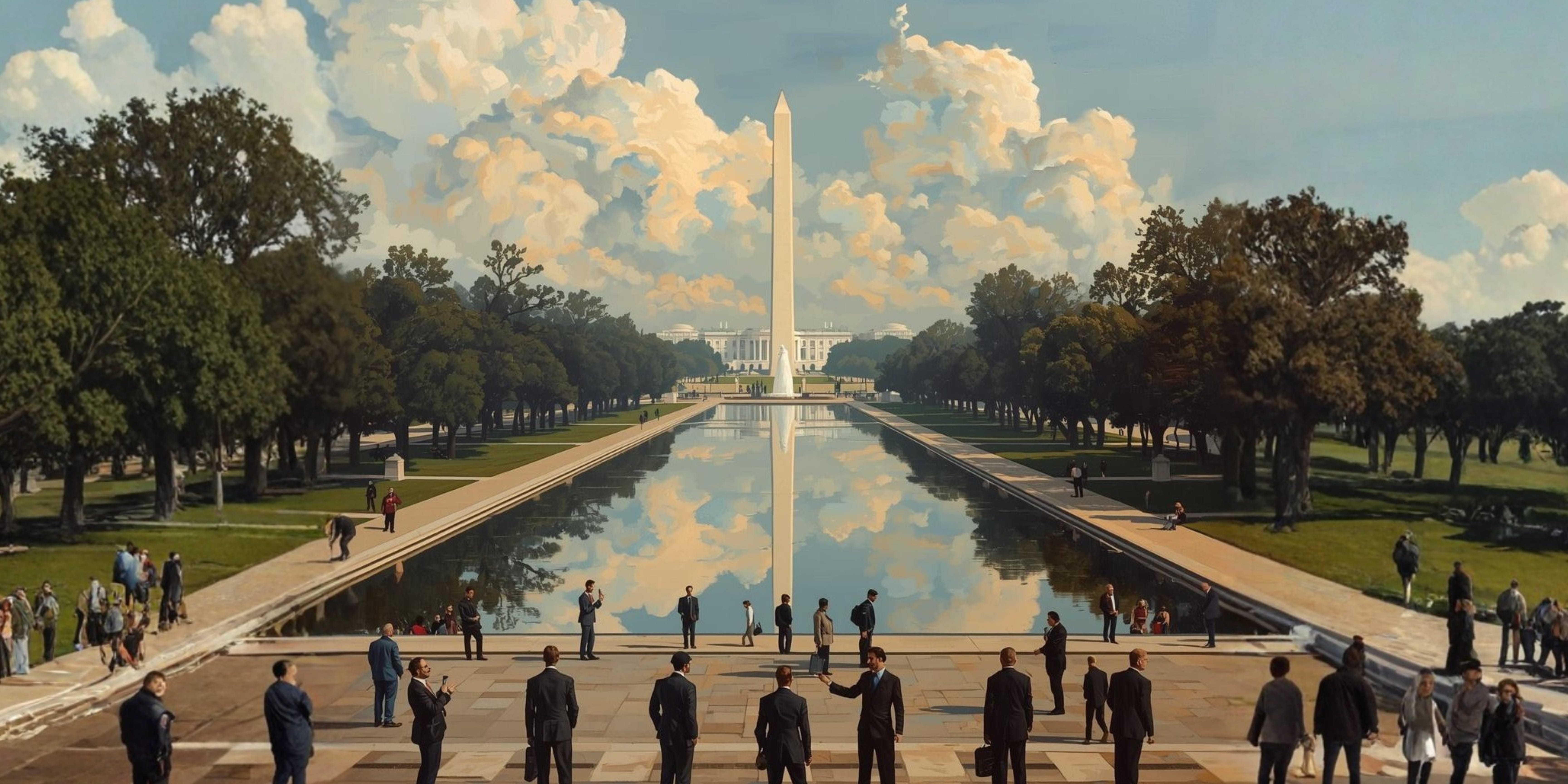
For the last decade, the tech world’s gravity centered on a 50-mile stretch in Northern California. The mantra was “move fast and break things,” and it worked when the stakes were mostly digital. But in 2026, the systems being built can’t afford to break with AI embedded in infrastructure, healthcare, and governance. That shift is forcing a move from disruption to construction.
Walk through NoMa or Union Market and you can feel it. There’s a quiet influx of teams working at the intersection of AI, policy, and infrastructure, choosing proximity to institutions over distance from them. This isn’t a mass exit from Silicon Valley, but it is a real expansion of where critical work is happening. DC is becoming a second center of gravity.
The Gravity of the “National Floor”
For years, startups operated in a fragmented environment of state laws, emerging AI rules, and unclear federal direction. That ambiguity is narrowing as executive actions, agency guidance, and policy momentum point toward a more unified approach. While there’s no single AI law yet, a “national floor” is starting to take shape around safety, accountability, and transparency.
That shift changes how companies build. Regulation is no longer something to deal with later. It’s something that shapes the product from day one. In DC, the closer you are to that reality, the more it becomes part of the blueprint.
The Shift in Talent
A different kind of operator is emerging in this environment. Not just engineers or policy experts, but hybrids who understand both how systems are built and how they’re governed. They think beyond performance and ask whether a system can actually exist within real-world constraints.
This is a shift from coder to architect. From shipping fast to building something that holds up once it touches the public.
Station DC
Look at Station DC near Union Market. It has become a natural gathering point for founders, policymakers, and operators working on adjacent problems. Not because it was designed that way, but because proximity makes those interactions inevitable.
It reflects something bigger. When builders and regulators share space, alignment happens faster, and what gets built tends to last longer.
The Builders to Watch
Emerald AI is exploring how AI systems intersect with energy infrastructure, especially as compute demand puts pressure on the grid.
GenLogs is making freight and transportation networks more visible, turning physical systems into usable data.
A growing layer of civic and govtech startups in DC is building directly within public systems, focusing less on disruption and more on integration.
TOGETHER! Takeaway
The “Silicon District” isn’t replacing Silicon Valley. It signals that the industry is maturing. As technology moves into critical systems, where you build starts to matter as much as what you build. DC offers proximity to the institutions that shape how these systems are deployed.
Building here means working within the system, not outside it. That requires a different kind of ambition, one focused less on speed and more on impact. The goal isn’t just the next platform, but the infrastructure of a functional society.
What Is Next?
Act: Civic Tech DC hosts regular project nights for builders working on public-interest technology.
Read: The emerging class of DC startups operating in AI, infrastructure, and policy-adjacent spaces.
Explore: Spend time in NoMa, the signal is quieter, but it’s there.
Around DC This Week
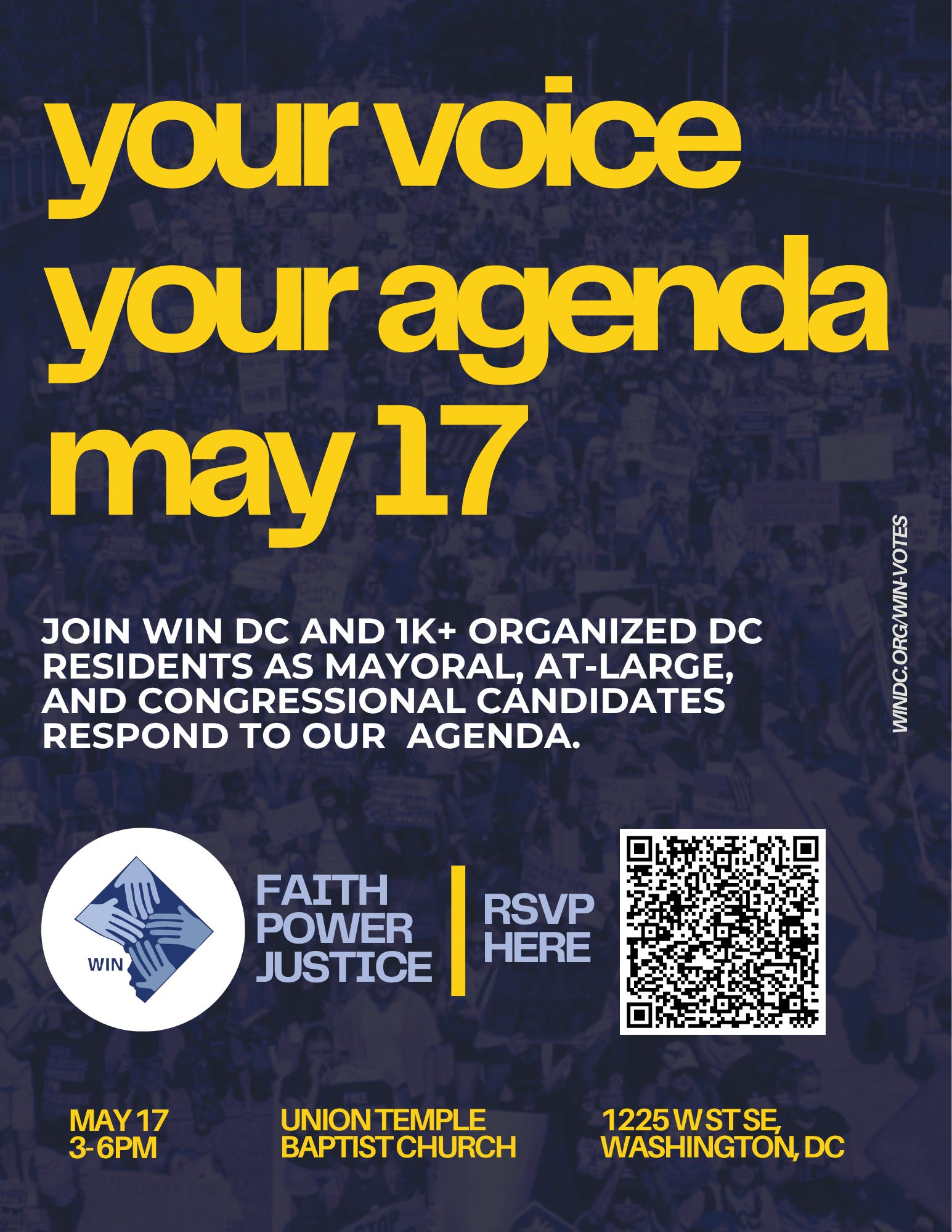
Sunday, May 17 • 3-5 PM at Union Temple Baptist Church
This Sunday, Washington Interfaith Network is hosting a candidate forum bringing together DC mayoral, at-large, and congressional candidates to discuss issues shaping the city’s future, from sustainability and housing to energy infrastructure and public accountability.
The conversation reflects a broader shift happening across DC right now: policy, technology, and civic power are becoming increasingly interconnected. As the city grows into a hub for AI, infrastructure, and governance, forums like this are where community priorities meet institutional decision-making.
The system is being rebuilt, so make sure you’re paying attention.
— The TOGETHER! Team